
Why Some Kitchen Towels Leave Lint on Glassware
Oct 30th 2026

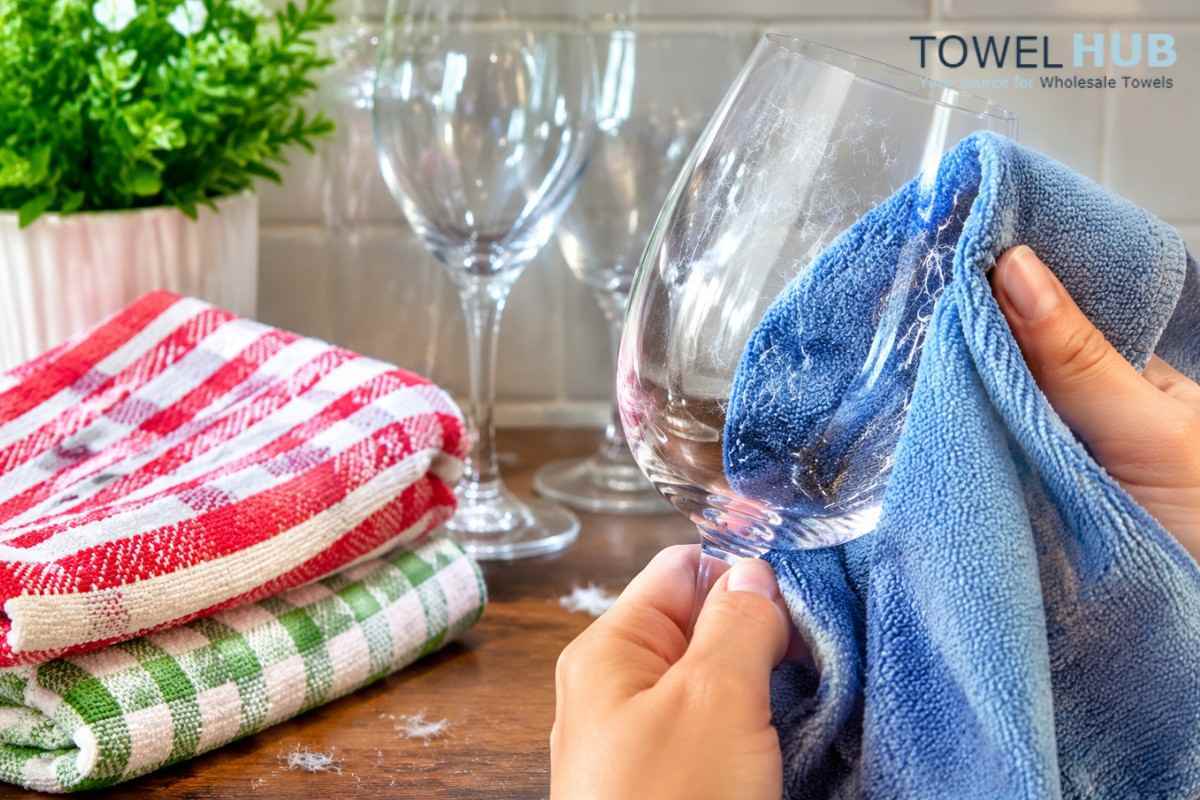
Kitchen towels leave lint on glassware because cotton is made of short fibers, and a towel rubbed hard against dry glass gives some of them up. A rack of Burgundy bowls can come out of the glass washer spotless and still reach the backbar wearing white fuzz after somebody on the closing shift buffs each one. Nothing went wrong in the machine.
Which towels shed, and how badly, is not random. It comes down to the weave, whatever the mill left in the cloth, and what the towel got washed with last night.
Lint From Kitchen Towels Explained
Untwist a thread pulled from the hem of an old bar towel, and what you're left holding is a tuft of fuzzy strands, none much longer than an inch. Twist alone holds yarn together. Each wipe and wring works a few of those strands free, a hot dryer frees a few more, and the loose ones end up on the glass. Streaks are a different headache (detergent residue and hard water cause those), and our post on why car wash towels leave streaks covers them.
Dish towels, bar mops and kitchen hand towels all shed to some degree. Stemware is another story. It usually gets polished warm out of the machine, and a dry towel dragged quickly around the bowl builds enough static to pull a fiber straight back.
Kitchen Towels Compared By Weave
Weave matters more than anything else a buyer gets to choose. Terry soaks up spills because of the loops of yarn standing up off its base cloth, but twist a thick terry towel inside a Bordeaux bowl and each of those loops scrapes the rim on its way around.
Herringbone shows up in so many restaurant kitchens because its zigzag weave lies flat and stays dense through heavy commercial laundering, and plenty of buyers ordering kitchen towels wholesale for a bar start there. Our 15 x 26 herringbone towels are 100 percent cotton, come in packs of 50, and are woven so they don't leave lint behind.
Most products sold as lint free kitchen towels are one of the flat weaves in that table. Waffle weave kitchen towels sit somewhere in the middle; the honeycomb pockets hold a fair bit of water, yet nothing on the face of the cloth is loose enough to snag a rim. For crystal, Riedel (the Austrian glassmaker) sells a microfiber cloth made only for polishing.
Other Reasons Kitchen Towels Shed Lint
Out of the package, a new towel is still carrying clippings from cutting and hemming, and quite often a softener or sizing that the mill put on so it would look crisp on a shelf. Both come off in the wash. Until then the towel sheds more than it ever will again and barely absorbs. Because many of our towels are compressed to save on freight, we ask buyers to wash and dry every one before use.
A glass towel can pick up lint it never made. Run it through the washer with bath towels, fleece or shop rags and it comes out wearing their fibers, then hands them over to the first glass it touches. The fix is a separate load for glass cleaning towels, shared only with other flat weaves, with microfiber washed on its own. Even lint-free towels come out fuzzy after one spin with bath towels.
Daily Habits For Lint Free Glassware
Good kitchen towels still need good handling, and three habits matter most.
A Quick Lint Test Before Ordering
Anyone writing up a large towel contract should work through the supplier questions in our towel vendor RFP checklist, and a lint test deserves a spot on it. Wash and dry one sample towel, polish a clean wine glass with it for around 20 seconds, and check it under bright light. Three or four fibers are normal for cotton kitchen towels. A dozen or more means that towel belongs on spill duty. Buyers weighing wholesale waffle kitchen towels against herringbone can put both through the same check.
First Wash For New Kitchen Towels
Before a new towel touches glassware, we recommend a soak in several gallons of warm water with a cup of white vinegar and half a cup of detergent, followed by a normal wash and a full dryer cycle. Don't skip the dryer; tumbling pulls out more loose fiber than the washer does. Dish drying towels need this most since they're on glass all shift, and our washing instructions give the water temperature for each towel grade.
The Two Towel Polish
A single towel goes damp somewhere around the sixth or seventh glass in a rack, and damp cotton smears and drags lint. That's why most bartenders polish with two. Towel one takes off the bulk of the water. Towel two never gets wet on purpose, and the minute it does, somebody grabs a fresh one from the shelf under the well.
Glassware Rules For Restaurants And Bars
Air Drying Under The FDA Food Code
Under Section 4-901.11 of the FDA Food Code, cleaned and sanitized utensils, glasses included, have to air-dry rather than be dried with a cloth. The same section carves out one exception.
The 2026 edition, released in September, left this section as it was. The polishing cloth is the last thing to touch a sanitized glass before a guest does, so the kitchen towels doing that job must be clean, dry and low in lint.
Stocking Kitchen Towels By Task
Lint is a lot easier to control when every towel in the building has one job and everybody knows what it is. Bar mops and kitchen hand towels go to spills and wet hands. Flat weaves, including any wholesale waffle kitchen towels you stock, live at the glass station, and a stripe color for each (blue for polishing, gold for wiping, say) stops the late-night mix-ups. Ordering bulk kitchen towels in one go keeps weave and weight the same, and our kitchen and bar range lists each option by size and pack count.
Common Asking Questions
These are the lint questions kitchens and bars ask most often.
What Kitchen Towels Leave No Lint On Glasses?
No cotton towel is completely lint-free, but flat, tight weaves come close. Herringbone, flour sack and waffle weave kitchen towels all behave well once they've had two or three washes, and that's the group most lint free kitchen towels on the market come from.
Why Do New Towels Shed So Much Lint?
They haven't been washed yet. A new dish towel still holds bits of fiber from cutting and hemming, and many mills finish their dish towels with a softener or sizing that makes them look crisp in the package but keeps them from absorbing. That's why we tell buyers to soak, wash and dry new towels before the first shift.
Is Microfiber Better Than Cotton For Drying Glasses?
They're good at different things. Cotton kitchen towels are better at pulling off water fast, and a thin microfiber cloth is better at the streak-free last pass. Just keep microfiber glass cleaning towels out of the cotton wash, or they'll bring lint right back to the glass.
Does Fabric Softener Cause Lint On Glassware?
The softener won't create lint by itself. What it does is leave a waxy coating on cotton, and a coated towel slides across the glass instead of drying it, leaving a thin film that loose fibers cling to. Dryer sheets cause the same problem, so neither has any business in the glass-towel load.
When Should Glass Towels Be Replaced?
Watch the towel rather than the calendar. Once a glass towel has worn thin enough to show light through it, started fraying along the hem or begun failing the lint test, even a good set of lint-free towels has earned a demotion to the spill bucket.
Nutshell
Fuzzy stemware gets blamed on the dish machine all the time, and the machine is rarely at fault. The towels are doing it. Swap terry for flat weaves at the glass station, give new stock a vinegar soak, keep glass towels out of the terry wash and save a dry towel for polishing, and dish drying towels will stay low in lint for years.
Restaurants, bars and hotels buying kitchen towels wholesale can outfit every station in one order from TowelHub. Bulk kitchen towels are sold by the pack, prices drop as quantities go up, and orders placed by 1 p.m. Eastern ship the same day. Ask for a sample and put it through the lint test before you restock.