

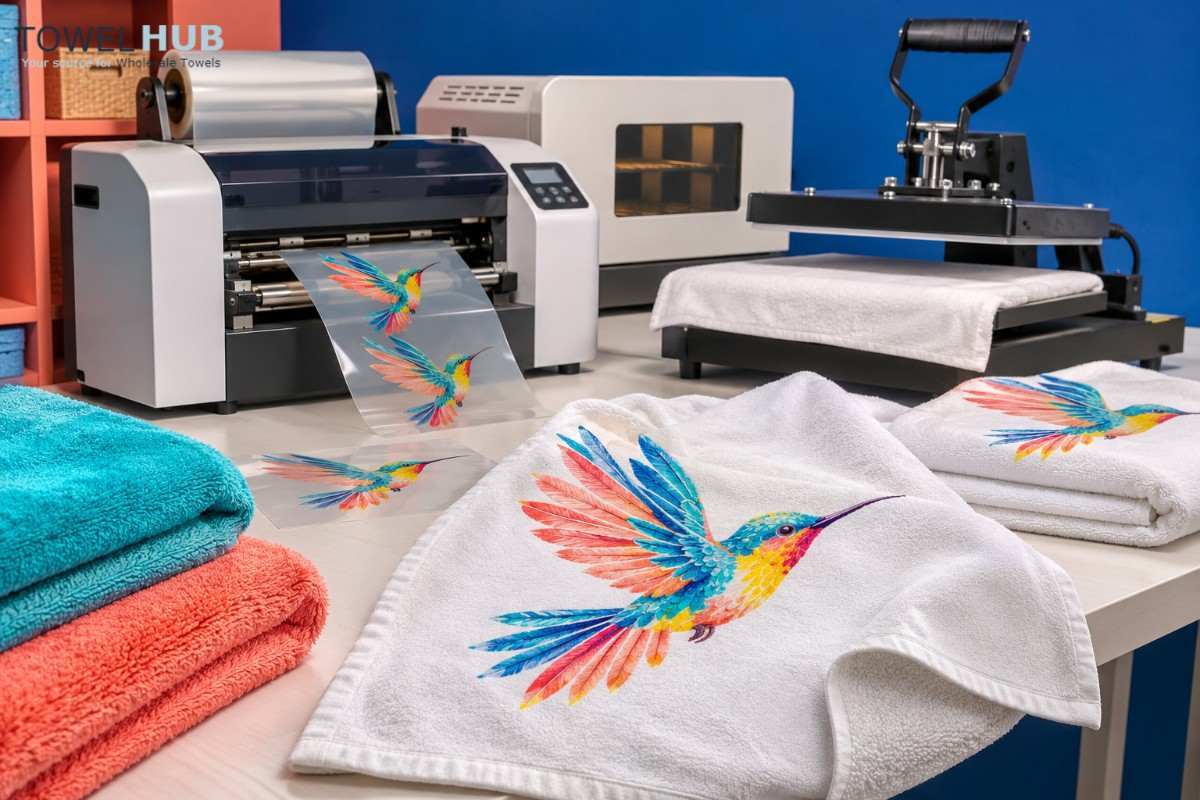
DTF printing on towels does not call for a factory. A full setup fits in a garage or a spare bedroom, and plenty of shops open with a single machine. Towels still ask more of the equipment than T-shirts do. The fabric is thicker, the hems stand tall, and the laundry runs hot. Below, each machine appears in the order a towel meets it, with advice on when to buy.
DTF Printing Turns Clear Film Into A Wash-Ready Towel Print
The design never touches the towel during printing. Instead, the printer lays CMYK ink on clear PET film and backs it with a white layer. That white base keeps red, gold and royal blue bright on a black towel. While the ink is still wet, hot-melt adhesive powder goes on top. Heat melts the powder, and a heat press later bonds the whole transfer to the fabric.
Why Velour Beats Standard Terry
Velour begins as ordinary terry cloth. The mill then shears the loops on one face down to a short, even pile. A transfer can grip that flat surface from edge to edge. Tall terry loops leave tiny air gaps under the film, so the print feels rough and wears sooner. For this reason, many decorators keep cotton terry velour towels as their default blank for logo work.
Four Machines In The Workflow
Every job moves through the same four stations.
- Printer, for the design and white base
- Powder shaker, for the adhesive coat
- Curing oven or dryer, to melt the powder
- Heat press, to bond the transfer to the towel
Choose A DTF Printer That Matches Your Real Order Volume
A printer is the highest single cost in DTF printing. Size it for the work you can fill this year. An idle machine still needs daily ink circulation and head care.
Print Width By Order Size
|
Printer Class |
Print Width |
Best For |
|
Desktop A4 or A3 |
About 8 to 13 in. |
Starting out, small logos, low daily volume |
|
A3+ or 13 in. roll |
About 13 in. |
Steady small-batch orders |
|
24 in. roll-to-roll (1 to 4 print heads) |
About 24 in. |
Gang sheets, team orders and wholesale runs |
A 13 in. width handles the logo zone on most hand, golf and sports towels. Wider 24 in. rolls pay back once you gang many designs onto one sheet. Teams, clubs and corporate buyers drive that volume, and they usually ask for blanks built for decoration, such as towels for printing and embroidery.
Printer Features That Prevent Downtime
- Automatic white ink circulation, because white pigment settles and clogs heads
- Simple head cleaning you can finish in a few minutes
- Included RIP software, since it controls the white base and color order
- A Windows PC, because most DTF RIP programs do not run on macOS
Powder And Curing Gear Decide How Long Prints Last
Towels go through hot washes again and again. Any thin spot in the adhesive shows up early as a lifted corner. In DTF printing on towels, the steps between printer and press matter more than on most garments.
Hand Powdering For Small Runs
For a handful of sheets a day, a shallow tray works. Pour powder over the wet print and tap the extra back in. Coverage depends on the operator, though, and it drifts from sheet to sheet.
Automatic Shakers For Even Coverage
Desktop shakers and inline shaker-dryer units coat every sheet the same way. On towels, that consistency is worth the money, because bare patches are where peeling begins.
Signs Of A Full Cure
Cured powder looks smooth with a light sheen. A grainy, sandy surface means it needs more heat. Small shops use a compact curing oven or hover a heat press just above the film without contact. Under-cured film tends to lift during the final press.
The Heat Press Is The Machine Towels Depend On Most
If the budget allows only one premium machine for DTF printing on towels, make it the press. A folded towel hem stands taller than the velour face around it. On a weak press, that hem props up the upper platen, and the print never gets full pressure. The result is a pale band or a soft edge that peels in the wash.
Platen Size For Common Towels
A 16 x 20 in. platen covers the print area on most hand and golf towels with room to spare. A 15 x 15 in. press is plenty for small logos and compact game-day items like rally towels.
Press Styles Compared
Clamshell presses hinge open like a book. They are compact and affordable for light daily work. Swing-away and draw presses move the hot platen fully aside. You can lay a towel flat and keep your hands clear. Pneumatic and auto-open models apply identical pressure every cycle, which helps on orders of several hundred pieces.
Heat And Pressure Checks
Display temperature and actual platen temperature often differ. Check five spots with an infrared thermometer, the center and each corner. Then confirm the press adjusts easily for thick blanks and still closes with firm, even force.
Low-Cost Pressing Tools Solve Most Towel Problems
Many DTF printing problems on towels come from the shape of the blank, not the transfer. A few cheap tools fix them.
- Teflon sheets or parchment paper to protect print and fabric
- Heat-resistant tape to hold the transfer in place
- A pressing pillow to lift the print area above the hems
- An infrared thermometer for real platen readings
- A lint roller to clear loose fibers from the velour face
Of these, the pressing pillow matters most. It lets the platen meet the print area evenly, even with a thick hem nearby. With the tools in place, the next job is setting temperature, time and peel. Our DTF heat, time, pressure and peel guide for cotton velour towels covers those numbers in detail.
Consistent Blanks Matter As Much As The Machines
No DTF printing setup can fix a weak blank. A 100% cotton velour towel gives the transfer a flat face, and cotton tolerates press heat without the shine some synthetics show. Before a large run, check for evenly sheared velour, flat hems and equal weight across the carton. Press one test piece from every new batch before printing the full order.
A Three-Stage Buying Plan Protects Your Cash
Quality pioneer W. Edwards Deming wrote, "Efforts, to be effective, must go in the right direction." For a new towel shop, the right direction means buying machines in a sensible order.
Press-Only Starter Setup
You can skip the printer, shaker and oven at the start. Order ready-to-press transfers or gang sheets from a transfer supplier and press them yourself. All you need is a good heat press, the small tools above and blank towels. For a full budget breakdown of this route, read our post on how to start a towel printing business with low startup costs.
Desktop Printer Upgrade
When you reorder transfers every week, bring printing in-house. A desktop or 13 in. printer, a powder tray and a small curing oven let you print on demand. You also control rush deadlines.
Roll-To-Roll Production Line
Regular team, club and wholesale contracts justify a 24 in. roll printer with an inline shaker-dryer and a pneumatic press. At that point, your slowest station sets daily output. Upgrade that station first.
Frequently Asked Questions
What Equipment Do You Need To Start DTF Printing On Towels?
For a press-only start, you need a heat press, Teflon sheets, heat-resistant tape, a pressing pillow, ready-made transfers and blank velour towels. An in-house setup adds a DTF printer, RIP software, a Windows PC, adhesive powder, a shaker and a curing oven.
Can You DTF Print On Regular Terry Towels?
Yes, though the print feels rougher and can lift sooner. Velour gives a flatter, cleaner bond.
What Size Heat Press Works Best For Towels?
A 16 x 20 in. platen suits most hand, golf and sports towels. A 15 x 15 in. press handles small logos.
Do You Need A DTF Printer To Sell Printed Towels?
No. Many shops sell for months with purchased transfers and one press. Buy a printer once weekly transfer orders cost more than printing in-house.
How Can You Make DTF Prints Last Longer On Towels?
Cure the powder fully and press with firm, even pressure. Afterward, wash in cool or warm water, skip bleach and fabric softener, and tumble dry on low.
To Sum Up
A smart DTF printing setup fits the orders you have today. Start with a dependable press and the right small tools. Add a printer once transfer reorders turn routine, then move to roll-to-roll when wholesale work fills the calendar.
Through each stage, keep the blank consistent. Order sample cotton velour towels from TowelHub today, run them through your own press, and launch your first towel line on blanks you have already proven.